.png?width=198&height=27&name=logo%20(1).png "Abrasivestocks")
From $1.2 Billion to $2.1 Billion: What Will Propel the Superhard Electroplated Grinding Wheel Market Over the Next Decade?
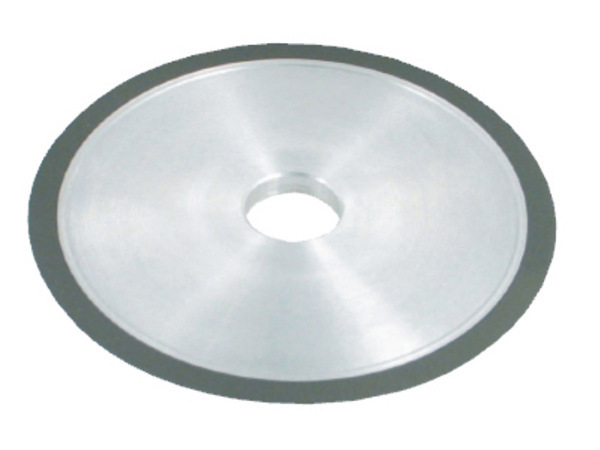
Table of Contents
I. Market Overview
The superhard electroplated grinding wheel market is demonstrating robust growth. Valued at approximately $1.20 billion in 2025, the market is projected to reach $1.26 billion in 2026 and is anticipated to grow to $2.10 billion by 2036. According to FMI analysis, this represents an incremental opportunity of $830 million over the forecast period.
Currently, the procurement landscape for superhard electroplated grinding wheels is being reshaped by three major structural shifts. Firstly, Aerospace OEMs are significantly increasing the proportion of difficult-to-machine superalloys and ceramic matrix composites used in next-generation engine programs, directly driving up the consumption of electroplated CBN and diamond grinding wheels required per engine produced. Secondly, the medical device industry is transitioning comprehensively from manual finishing to automated CNC grinding to meet the tighter dimensional tolerances mandated by FDA and EU MDR quality systems. Thirdly, the semiconductor and electronics packaging sectors are accelerating the adoption of electroplated diamond grinding wheels for wafer thinning and substrate dicing, where reduced kerf loss significantly improves material yield.
From a regional growth perspective, China leads the global market with a 7% CAGR, followed by India at 6.5%, Germany at 6%, Brazil at 5.5%, the US at 4.9%, the UK at 4.4%, and Japan at 3.9%.
II. Market Growth Drivers
The growth of the superhard electroplated grinding wheel market is primarily driven by the following factors:
Increasing Demand from High-End Manufacturing: There is a sustained rise in demand for high-precision grinding solutions from sectors such as aerospace, optical glass, medical devices, and semiconductors. These industries have a rigid requirement for the high cutting capability, precision, and long service life offered by diamond/CBN wheels.
Expansion of Hard and Difficult-to-Machine Materials: The proliferation of titanium alloys, ceramic matrix composites, and superalloys in critical components makes superhard grinding wheels an indispensable processing tool.
Technological Advancements and Automation Upgrades: Continuous breakthroughs in superhard material technology and the widespread adoption of automated production systems are making superhard grinding wheels more cost-effective.
Accelerated Industrialization in Emerging Economies: Rapid industrial expansion in the Asia-Pacific region is generating substantial demand for advanced grinding solutions.
Global Mega-Trends: The overarching global trends of industrial automation, sustainability, and energy-efficient manufacturing are also boosting the adoption of high-performance grinding wheels.
III. Segment Analysis
By Type: Diamond Electroplated Wheels Dominate
The market is segmented by type into diamond electroplated wheels, CBN electroplated wheels, and others. Diamond electroplated wheels lead the market with approximately a 45% share. This dominance is attributed to diamond's unmatched hardness and grinding performance, making it the preferred choice for high-precision machining in aerospace, optical glass, and medical devices. Diamond wheels can machine hard, brittle materials and composites with minimal thermal damage and excellent surface quality.
In aerospace, the extreme precision and reliability requirements for titanium alloys, composite airframes, and ceramic parts drive manufacturers towards diamond wheels. In optical glass and semiconductors, the need for ultra-precision machining and defect control further solidifies diamond wheels' leading position. With the scaling up of manufacturing bases in the Asia-Pacific region, diamond electroplated wheels are expected to maintain their lead in this segment.
By Application: Aerospace Leads
By application, the market is divided into Aerospace, Optical Glass, Medical Devices, Semiconductors, 3C (Consumer Electronics), and Industrial sectors. Aerospace accounts for approximately 20% of the market share, making it the largest application segment.
Aerospace manufacturing requires processing difficult-to-machine materials like titanium alloys, nickel-based superalloys, composites, and hardened ceramics, demanding exceptional durability and precision from grinding wheels. Diamond electroplated wheels are widely used for critical components like engine turbine blades, structural parts, and landing gear, where surface quality and dimensional accuracy are directly linked to component life and flight safety.
The expansion of global air travel capacity, lightweighting trends, and the reliance of next-generation engines on advanced materials are jointly fueling strong demand for superhard wheels. While North America and Europe continue to lead in aerospace technology innovation, Asia-Pacific's rapidly growing manufacturing capacity adds further volume to the demand. As aerospace manufacturing moves towards automation and greater efficiency, the need for customized electroplated wheels will remain robust.
IV. Market Restraints
Despite the positive outlook, the superhard electroplated grinding wheel market faces several challenges:
High Production Costs: Diamond and CBN abrasives are inherently expensive, and the complex electroplating manufacturing process results in high unit prices, making them less accessible to small and medium-sized enterprises and price-sensitive industries.
Maintenance Complexity and Skill Gap: The specialized nature of equipment maintenance and the need for experienced technical operators create a talent shortage, particularly in developing regions.
Competition from Alternative Technologies: Traditional grinding tools and certain new processing technologies pose competitive pressure in specific scenarios due to cost advantages.
V. Regional Market Analysis
1. China
China leads the global market with a robust CAGR of 7%. The rapid expansion of its manufacturing, automotive, and electronics industries is the core driver. As China's manufacturing capabilities continue to advance, the demand for high-precision superhard wheels is surging across automotive, aerospace, and semiconductor manufacturing. High investment in technological innovation and industrial automation, combined with strategies to upgrade productivity and quality, will solidify its global dominance.
2. India
The Indian market is experiencing significant growth at 6.5%, driven by the rapid expansion of its manufacturing sector, particularly in automotive, machinery, and metal processing. As an emerging global manufacturing hub, demand for high-efficiency, high-finish precision tools is growing. Industrial development policies, manufacturing automation, and digital transformation are promoting the adoption of advanced grinding technologies, especially for high-precision machining of automotive components. With ongoing modernization of manufacturing capacity, the Indian market is expected to maintain high growth.
3. Germany
The German market is projected to grow at a CAGR of 6%. As Europe's largest manufacturing and industrial center, Germany remains a global leader in automotive, aerospace, and precision engineering, driving strong demand for high-performance grinding tools. The deep implementation of the Industry 4.0 strategy is accelerating the adoption of automation, digital tools, and smart factories, boosting demand for high-precision, high-efficiency grinding wheels. Continued modernization of the manufacturing sector will further underpin Germany's stable growth.
4. Brazil
Brazil shows stable growth at 5.5%, primarily benefiting from the ongoing expansion of its industrial base in automotive, machinery, and metal processing. As infrastructure and manufacturing investments increase, industries are seeking advanced grinding solutions to meet precision and efficiency requirements. National strategies to enhance industrial productivity and export competitiveness, coupled with substantial demand for high-precision tools in the automotive sector, will drive steady market expansion.
5. United States
The US market is expected to grow at a CAGR of 4.9%. As a benchmark for industrial automation and high-precision manufacturing, the US sees strong demand for superhard wheels from aerospace, automotive, and medical device sectors. The acceleration of manufacturing automation and digital transformation is driving the adoption of more efficient and precise grinding technologies. A solid industrial base and a strong tradition of precision engineering ensure the US market will maintain long-term, stable development.
6. United Kingdom
The UK market is growing steadily at a CAGR of 4.4%. Its mature manufacturing and automotive industries, combined with a focus on advanced engineering and precision manufacturing, continue to drive demand for high-performance wheels. Sectors like aerospace, automotive, and medical device manufacturing require fine finishes and precision cutting. The deepening adoption of Industry 4.0 technologies and increased investment in manufacturing and automation innovation will jointly support continued growth.
7. Japan
The Japanese market is projected to grow at a CAGR of 3.9%. As a global hub for precision manufacturing and automotive production, Japan has a stable demand for high-precision grinding solutions. Its relentless pursuit of quality, innovation, and production efficiency ensures superhard wheels play a critical role in precision cutting and finishing. Although the growth rate is more moderate compared to some emerging economies, Japan's mature manufacturing ecosystem and ongoing technological upgrades guarantee stable demand for high-performance wheels, maintaining a steady market development trajectory.
Conclusion:
Benefiting from the expansion of high-end manufacturing, breakthroughs in materials technology, and automation upgrades, the superhard electroplated grinding wheel market is poised for steady growth between 2026 and 2036. Emerging markets like China and India are leading in growth rate, while mature markets such as the US, Germany, and Japan provide stable support through technology upgrades and replacement demand. Although growth rhythms vary by region, they collectively paint a picture of sustained expansion driven by precision manufacturing and material innovation.

.png?width=400&name=17%20(1).png)