.png?width=198&height=27&name=logo%20(1).png "Abrasivestocks")
Gardening Tools at a New Turning Point: Triple-Thrust Advance in Technological Innovation, Brand Building, and Service Ecosystem
Table of Contents
In recent years, the gardening tools industry has entered a new stage of development. Application scenarios are expanding from household gardening to professional fields, while products continue to upgrade toward electrification and intelligent control. For manufacturing and export-oriented enterprises, this shift represents a structural opportunity worth close attention.
1.Industry Development Trends
According to industry data, the global lawn and garden equipment market reached approximately USD 41 billion in 2024 and is projected to grow to about USD 45.45 billion by 2025.
Within the global supply chain, China has long served as the core production base and the major supplier of key components. China accounts for roughly 70% of global gardening tool production capacity and nearly 80% of component supply. However, in major overseas end markets, the market share of Chinese-owned brands remains below 10%. This imbalance—strong manufacturing capability but weak brand presence—is both a challenge and an opportunity.
The shift from gasoline-powered tools to electric solutions continues to accelerate. While gasoline tools still dominate, the growing maturity of lithium battery technologies, declining costs, and emission restrictions across Europe and the U.S. are driving rapid adoption of battery-powered gardening tools. Some institutions forecast the global lithium-battery gardening tool market to reach USD 5.6 billion by 2025.
Meanwhile, emerging advantages in domestic lithium battery, new energy, and intelligent control technologies are opening new windows for enterprises to upgrade and enhance brand competitiveness.
2.Product Categories with Strongest Demand
Cordless Lithium Battery Lawn Mowers / Trimmers / Brush Cutters
Lightweight and low-noise electric tools are becoming the first choice for residential gardening, landscape maintenance, and property management.
Robotic Mowers & Automated Solutions
Widely used in parks and municipal green spaces, they represent a major innovation direction for specialized manufacturers.
Lightweight Electric Handheld Tools (e.g., pruning shears, blowers)
Rapidly growing among household and small-scale gardening users.
Commercial High-Performance Equipment (e.g., ride-on mowers)
Emphasizing durability and reliability, these are key focus areas for brands seeking higher value and differentiation.
For manufacturers seeking to expand overseas, precisely targeting these categories and upgrading product portfolios will be essential.
3.Industry Pain Points Affecting Growth
Product and Technical Challenges
Clogging of grass clippings, blade jamming, and motor overheating remain common for mowers.
Handheld tools still struggle with the balance between power and weight.
Professional users continue to face issues with line replacement and mechanical maintenance.
Supply Chain and Brand Structure Imbalance
China dominates global manufacturing, yet Chinese brands hold limited market share in Europe and America, resulting in low value capture at the manufacturing end.
Homogenization & Price Competition
Lack of differentiated design, technology, and service offerings pushes many companies into price wars, reducing overall profitability.
4.Key Solutions and Technology Applications
Improved Debris Discharge & Airflow Design
Optimized airflow and duct structures for mowers help reduce clogging and improve efficiency.
Enhanced Motor Heat Dissipation
Better cooling designs for motors and control modules ensure stable operation under high loads.
Lightweighting with High-Energy-Density Batteries
Brushless motors and lighter battery systems raise the power-to-weight ratio of handheld tools.
Modular Design & Quick-Maintenance Structures
Quick blade replacement, modular batteries, and easy-disassembly designs improve user experience and reduce downtime.
Integrated Abrasives Application Across Manufacturing and Service
Precision grinding and polishing of blades, gears, and housings improve durability and surface quality.
Offering sharpening and refurbishment services enhances after-sales value.
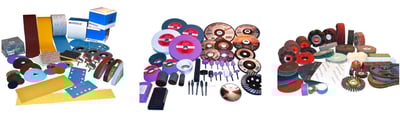
At the service and consumables end, some manufacturers are beginning to work with platforms such as Abrasivestocks, which provides fast delivery of abrasive belts, grinding wheels, non-woven abrasives, and other consumables used in blade sharpening and maintenance. This helps brands build a more reliable and responsive service ecosystem.
5.Future Directions Enterprises Should Strengthen
Increase R&D in Battery Systems & Electronic Control
Improve BMS, thermal management, charging efficiency, and output stability.
Shift Toward Differentiation & High Value-Added Segments
Expand into commercial gardening tools and embed service-based value.
Brand Building + Localized Channels
Strengthen presence through international exhibitions, overseas warehouses, and local after-sales service systems.
In markets such as Australia and the United States, the availability of local abrasive stock—supported by platforms like Abrasivestocks, which maintains inventory and offers quick delivery—enables manufacturers to provide faster sharpening, refurbishment, and consumables replenishment for gardening tools, improving user experience and brand loyalty.
Enhance Compliance & Environmental Capabilities
Address regulatory requirements such as noise control, emissions standards, and battery recycling in Europe, America, and Australia.
Develop a Closed-Loop “Tools + Services + Consumables” System
Building a stable consumables chain and refurbishment service system extends tool lifespan and strengthens customer stickiness.
Conclusion
Looking ahead, enterprises that can advance simultaneously in technology innovation, brand capability, and service ecosystem building will be positioned to lead the next growth cycle of the gardening tool industry.
Abrasivestocks is a global abrasives supply platform offering cutting discs, belts, papers, and media, with growing local inventory in Australia and North America to support faster delivery for manufacturers and service providers.