.png?width=198&height=27&name=logo%20(1).png "Abrasivestocks")
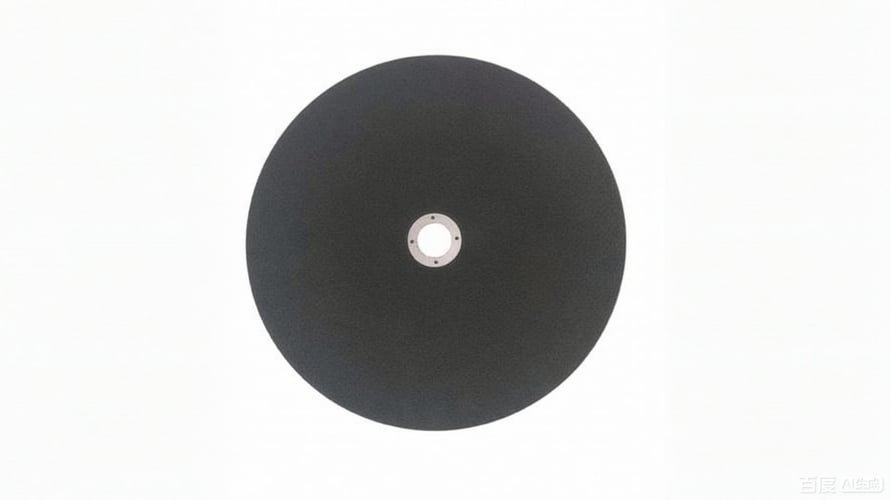
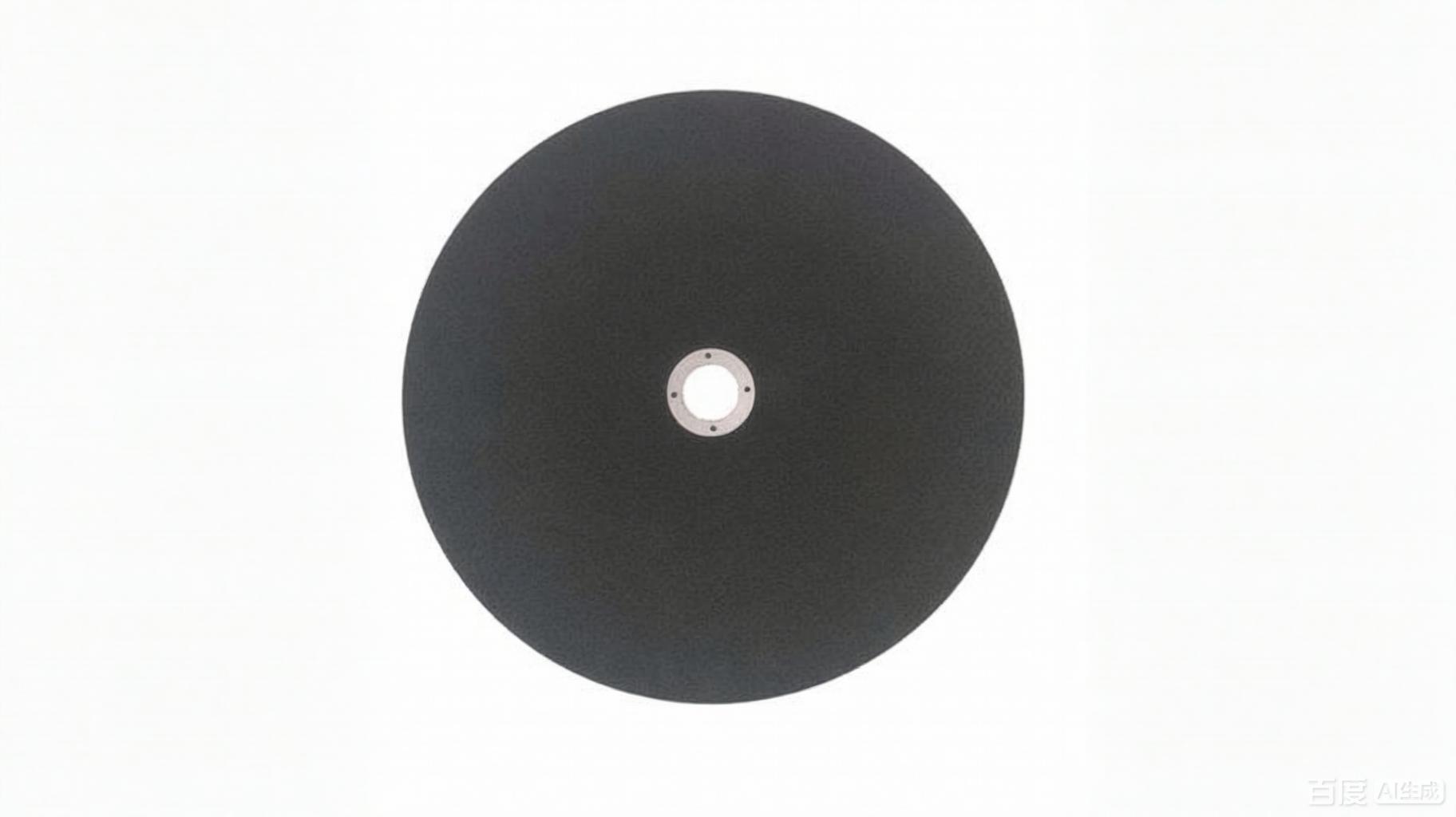
In industrial and manufacturing settings, cut-off wheels are a fast and precise cutting tool for preparing various metal components. They are suitable for a wide range of materials, including steel, aluminum, titanium, and Inconel. However, selecting the right cut-off wheel for the specific application is essential to achieving ideal cutting results and meeting production goals.
I. Impact of Cut-Off Wheel Selection on Total Cost
In actual production, time directly translates to cost. If cut-off wheels are selected based solely on purchase price, hidden factors that have a greater impact on overall costs—such as labor hours, replacement frequency, and material waste—are often overlooked.
The total cost of a cut-off wheel is influenced by several factors, including:
Purchase Price: The obvious initial investment.
Labor Costs: Includes actual cutting time and the time spent changing cut-off wheels. Operator time is often the most expensive part of the cutting application.
Wheel Life: The number of cuts a single wheel can complete.
Operator Skill: The manner of use affects both efficiency and safety.
When evaluating the cost-effectiveness of a cut-off wheel, you shouldn't just look at the unit price. Instead, comprehensively consider the cost per cut, cutting speed, and replacement frequency. Generally, wheels with a shorter lifespan cut faster, while those with a longer lifespan cut more slowly. Therefore, it's necessary to balance cutting speed and lifespan based on specific working conditions to determine the lowest total cost of use.
II. Key Factors Affecting Cut-Off Wheel Performance and Lifespan
Wheel Too Soft (Relative to Base Material): Reduces the number of cuts per wheel, increasing the cost per cut.
Wheel Too Hard: While it may provide more cuts, the cutting speed is slow, increasing labor costs.
High Replacement Frequency: Creates process bottlenecks and reduces productive uptime.
Excessive Operating Pressure: Increases operational safety risks, a common cause of accidents in metal cutting. Leads to heat buildup, shortens wheel life, and can cause workpiece deformation (e.g., aluminum). May damage the angle grinder motor, resulting in downtime or repair costs.
Increased Burr Formation: Certain wheels generate more friction and burrs, extending post-cutting deburring time.
Insufficient Cutting Accuracy: Affects workpiece fit-up before welding, potentially increasing filler metal consumption and raising welding costs.
III. How to Choose the Right Cut-Off Wheel
Before selecting a cut-off wheel, you should first clarify your own production goals and pain points: whether you need higher output, more efficient welding time, or reduced filler metal usage. Systematically evaluating processes with high cutting volumes, high consumable costs, or safety concerns can be very helpful.
The following are key technical parameters to consider when selecting a cut-off wheel.
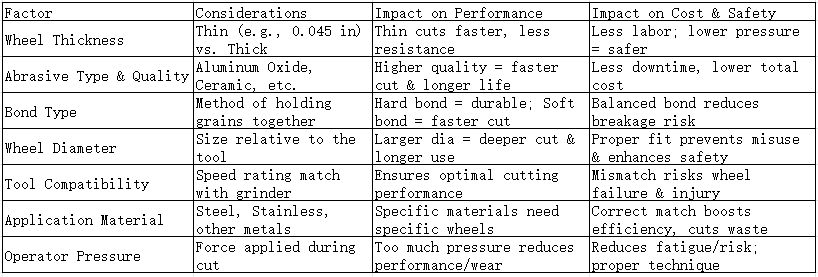
Base Material Type: Cutting aluminum requires wheels designed with anti-loading properties. For hard materials like titanium, Inconel, armored steel, or high-nickel alloys, ceramic abrasive grain wheels are recommended. Incorrect material matching significantly wastes time and cost.
Wheel Type: Type 1 features a flat profile for deeper cuts. Type 27 has a depressed center or raised hub for confined angle operations.
Wheel Diameter: In the US, 4.5-inch and 6-inch are common. A 6-inch wheel provides more cuts per wheel and allows access to tighter areas.
Wheel Thickness: For sheet metal, a 0.045-inch (approx. 1.14mm) or thinner 1mm ultra-thin wheel is recommended, offering fast cuts, less friction, and fewer burrs. A 1/8-inch (approx. 3.2mm) thick combination wheel serves both cutting and light grinding functions.
Abrasive, Grit, and Bond: Common abrasive types include aluminum oxide, silicon carbide, zirconia alumina, and ceramic aluminum oxide. Choice depends on the material being cut and performance requirements.
Grit: Ranges from coarse to fine, affecting cut rate.
Bond: Determines wheel hardness and lifespan.
Hard bond: Longer life, suitable for softer materials.
Soft bond: Abrasives release faster, providing a quicker cut but shorter life.
Tool Compatibility: Cut-off wheels are typically used on angle grinders. Ensure the tool’s current or power is sufficient to maintain the wheel’s rated speed. Insufficient power prevents the wheel from achieving its intended performance.
IV. Impact of Cut-Off Wheel Selection on Safety
The choice of cut-off wheel directly impacts operational safety. Proper selection helps reduce vibration, minimize the risk of breakage, and ensures the wheel's speed rating matches the tool. Additionally, operators should receive safety training specific to the cut-off wheel being used to further reduce accident risks.
Key safety considerations include:
Using a cut-off wheel that matches the tool's speed rating. Mismatched speeds can cause wheel rupture.
Avoiding excessive pressure, a common cause of injury and workpiece damage.
Regularly inspecting wheel condition. Do not use products that are damp, contaminated, or past their expiration date.