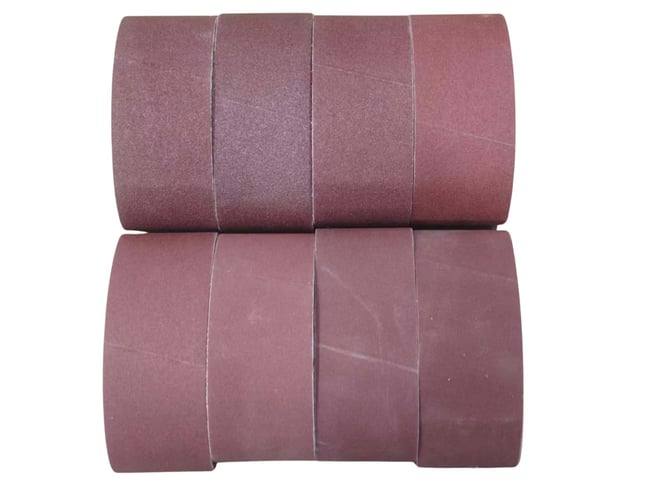
Metalworking, woodworking, and electronics manufacturing—these industries are placing increasingly stringent demands on sanding precision, and the demand structure for abrasive cloth rolls is changing accordingly. The IndexBox report shows that from 2025 to 2035, the global market index will rise from 100 to 156, a CAGR of 4.6%. The number isn’t explosive, but in an industry as traditional as they come, this growth rate is worth a closer look.
The core driver of growth is the deep automation of surface treatment processes. In fields such as metalworking, woodworking, and electronics manufacturing, requirements for surface quality and processing efficiency continue to rise, and cloth-backed abrasives are steadily expanding their market share thanks to their superior flexibility and durability compared with paper-backed products. Particularly noteworthy are high-end product lines with fine grits and long service life, which are growing at 7–8% annually—this is where the real money is.
PART.01
Three Core Battlegrounds: Who Are the Main Consumers?
More than 70% of abrasive cloth roll end use falls into three industries, but each industry has different demands:
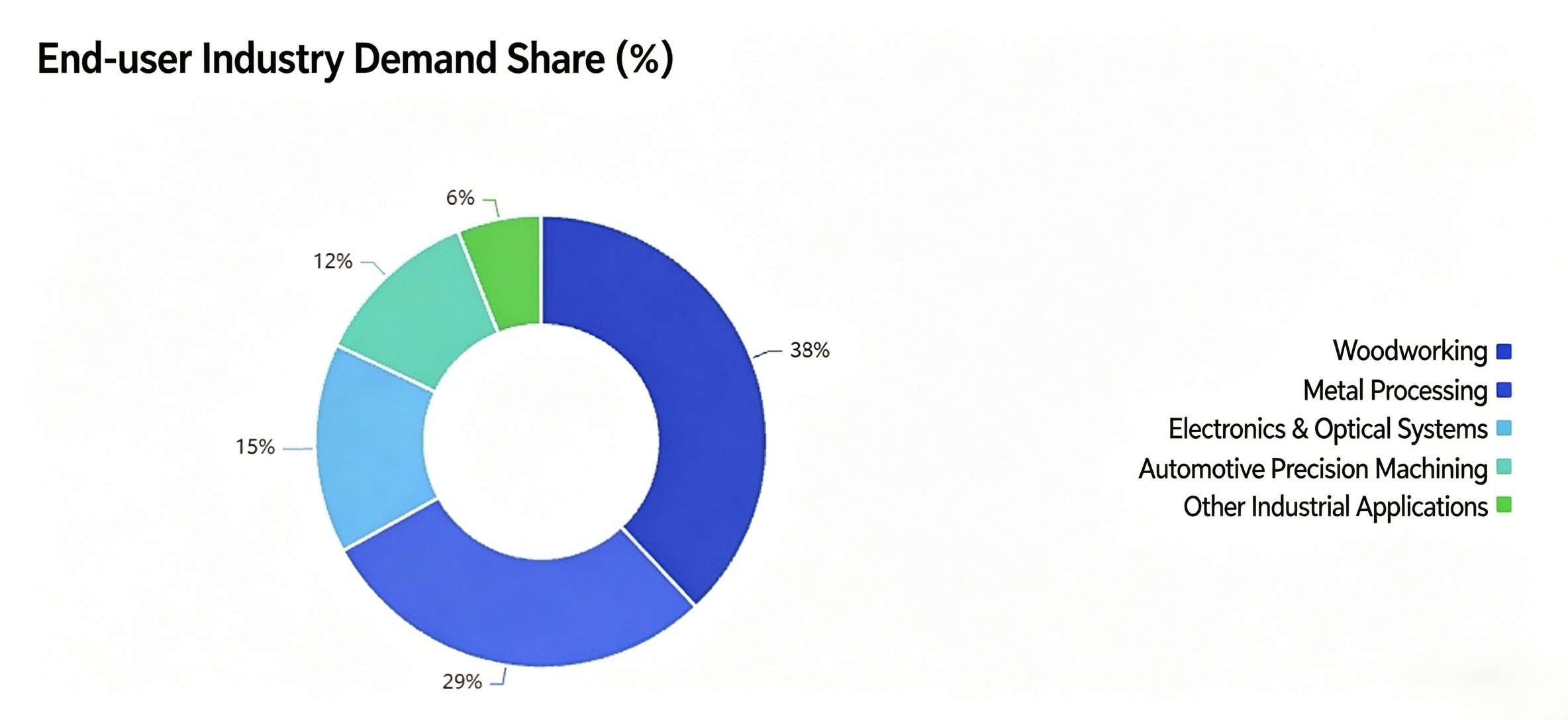
Woodworking (38%)
Furniture, flooring, and panel sanding, with the main growth drivers being the recovery in residential housing and Asia’s OEM furniture production for DIY. The spread of automated sanding lines has pushed up demand for wide-width rolls, and the penetration of water-based coatings is also forcing products to migrate toward finer grits.
Metalworking (29%)
Automotive and aerospace are the core application scenarios, where engine parts and airframe structural components have extremely demanding surface quality requirements. Ceramic alumina and zirconia alumina products stand out for their self-sharpening advantages, reducing roll-change frequency and lowering overall costs, and their market share continues to expand.
Electronics and optics (15%)
The fastest-growing segment. Precision processing of 5G infrastructure, EV electronics, consumer electronics structural components, and optical components is creating rigid demand for ultra-fine-grit, low-contamination, high-precision polishing products.
The remaining two segments are smaller but still worth watching:
Automotive refinishing (12%)
Body repair and paint finishing are the base. Waterproof abrasive cloth rolls see stable usage in wet sanding scenarios. The emergence of EV-specific coating systems is creating new supporting demand.
Other industrial applications (6%)
Shipbuilding, construction, composites processing, and wind turbine blades—individually small, but with diverse varieties and demanding requirements, creating rigid demand for special specifications such as water-resistant backing and heavy stock removal. The expansion of wind power and composites in recent years has added some incremental growth to this segment.
PART.02
Supply Chains Are Moving Farther Afield
The global landscape is also quietly changing, and simple “Made in China” production is transitioning toward regional dispersion.
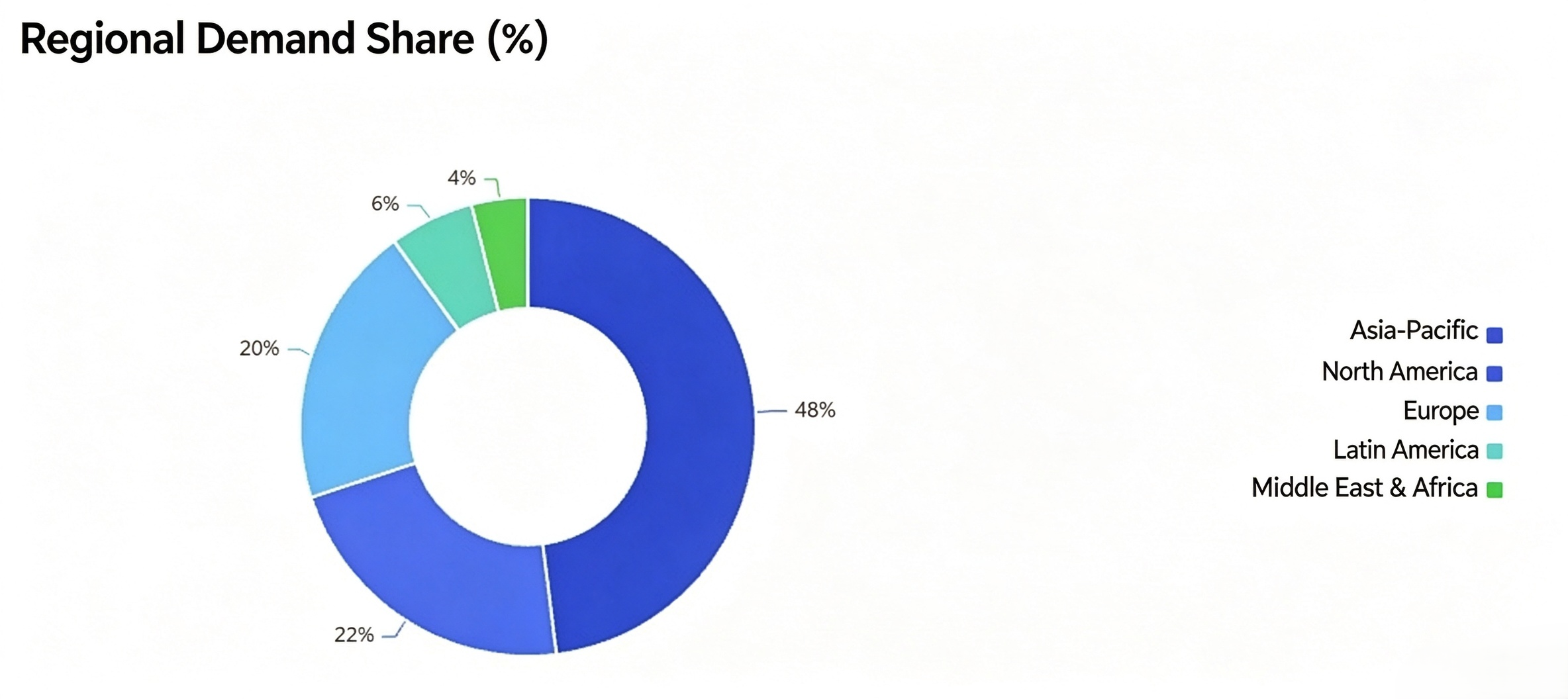
Asia-Pacific (48%)
Asia-Pacific leads global consumption, mainly thanks to China’s strong manufacturing base and the booming woodworking and electronics industries. India and Southeast Asia are emerging as growth centers, with accelerating industrialization and growing infrastructure investment. The region also has many large production facilities, making it an important demand and supply center. Direction: dominate and continue growing.
North America (22%)
North American demand is stable, with growing demand for high-performance products from aerospace and automotive. The region is increasing imports from Turkey and India to diversify its supply chain. Strict quality standards and automated production processes provide a guarantee for premium rolls. Market trend: stable, tilting toward high-end.
Europe (20%)
The European market has matured, with strong demand from woodworking and metalworking. The region is actively promoting supply chain regionalization, sourcing more from Eastern Europe and Turkey. Environmental regulations are driving innovation in water-based and UV-cured abrasive products. Direction: mature and regionalized.
Latin America (6%)
Latin America shows moderate growth, mainly driven by construction and furniture manufacturing in Brazil and Mexico. The region relies on imports for high-quality abrasive cloth rolls, with limited local capacity. Economic and exchange-rate volatility pose challenges, but infrastructure projects support demand. Direction: emerging growth.
Middle East and Africa (4%)
The Middle East and Africa market is small but growing rapidly, mainly thanks to construction and oil and gas maintenance. The region’s import dependence exceeds 40%, with major markets in the UAE, Saudi Arabia, and South Africa. By 2035, diversified infrastructure development is expected to drive moderate market growth in the region. Direction: niche but expanding.
PART.03
Outlook: Rough Seas and a Course Forward
Looking ahead to 2035, market participants must face both opportunities and challenges:
Opportunities: digital procurement and vendor-managed inventory (VMI) models are compressing lead times by 15–25%, improving supply chain efficiency.
Risks: price volatility in raw materials such as phenolic resin, and rising environmental compliance costs from the phase-out of solvent-based processes, will continue to test manufacturers’ cost control capabilities.
Put simply, the traditional abrasive cloth roll industry is being forced to upgrade by automation and precision manufacturing. The headline 4.6% annual growth looks decent, but the real money is in high-end products growing at 7–8%. Over the next decade, whether companies can capture this wave of benefits depends on two things: whether products can command a premium and whether supply chains can withstand volatility. The rest is detail.