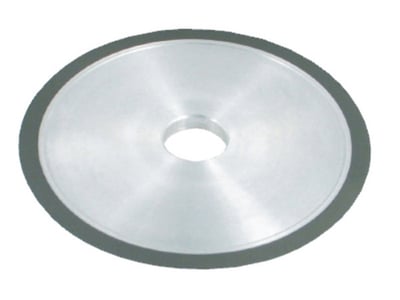
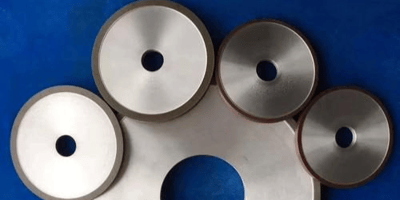
From $1.2B to $2.1B: What Drives the Next Decade of the Electroplated Superabrasive Grinding Wheel Market?
Table of Contents
1. Executive Market Summary
The electroplated superabrasive grinding wheel market is demonstrating a robust growth trajectory. Valued at approximately USD 1.20 billion in 2025, the market is projected to reach USD 1.26 billion in 2026 and expand to USD 2.10 billion by 2036. According to FMI analysis, the market is expected to unlock an incremental opportunity of USD 830 million over the forecast period.
Currently, the procurement landscape for electroplated superabrasives is being reshaped by three structural shifts:
Aerospace OEMs have significantly increased the adoption ratio of difficult-to-cut superalloys and Ceramic Matrix Composites (CMCs) in next-generation engine programs, directly driving up the consumption of electroplated Cubic Boron Nitride (cBN) and diamond wheels per engine produced.
Medical Device Manufacturing is transitioning comprehensively from manual finishing to automated CNC grinding to satisfy tighter dimensional tolerance requirements mandated by FDA and EU MDR quality systems.
Semiconductor and Electronic Packaging sectors are accelerating the adoption of electroplated diamond wheels for wafer thinning and substrate dicing, where reduced kerf loss dramatically improves material yields.
In terms of regional growth, China leads globally with a Compound Annual Growth Rate (CAGR) of 7.0%, followed by India at 6.5%, Germany at 6.0%, Brazil at 5.5%, the US at 4.9%, the UK at 4.4%, and Japan at 3.9%.
2. Key Market Growth Drivers
The growth of the electroplated superabrasive grinding wheel market is primarily driven by the following factors:
Escalating demand for high-precision grinding solutions across high-end manufacturing sectors, including aerospace, optical glass, medical devices, and semiconductors. These industries have a structural need for the high stock-removal rate, precision, and extended tool life offered by diamond and cBN wheels.
Expanding application of hard, brittle, and difficult-to-cut materials. As titanium alloys, CMCs, and nickel-based superalloys become ubiquitous in critical components, superabrasive wheels have become indispensable processing tools.
Technological advancements and automation upgrades. Breakthroughs in superabrasive grit technology and the proliferation of automated grinding systems have made electroplated wheels more cost-effective and efficient.
Accelerated industrialization in emerging economies. Rapid industrial expansion in the Asia-Pacific region is driving massive demand for advanced grinding solutions.
Macro trends in global industrial automation, sustainable manufacturing, and energy-efficient machining are further boosting the widespread adoption of high-performance grinding wheels.
3. Market Segmentation Analysis
By Product Type: Electroplated Diamond Wheels Lead the Segment
The market is segmented by product type into electroplated diamond wheels, electroplated cBN wheels, and others. Electroplated diamond wheels dominate the market with approximately a 45% share. This leadership is attributed to diamond's unmatched hardness and abrasive performance, making it the premier choice for high-precision machining in aerospace, optical glass, and medical devices. Diamond wheels process hard, brittle, and composite materials with minimal thermal damage and superior surface integrity.
In aerospace manufacturing, where titanium alloys, composite structures, and ceramic components demand extreme precision and reliability, diamond wheels enable manufacturers to meet stringent standards. In optical glass and semiconductors, the imperative for ultra-precision finishing and defect control further solidifies the position of electroplated diamond wheels. Coupled with the scaling up of Asia-Pacific manufacturing hubs, electroplated diamond wheels will continue to maintain their segment dominance.
By Application: Aerospace Holds the Top Position
By application, the market encompasses aerospace, optical glass, medical devices, semiconductors, 3C (consumer electronics), and general industrial manufacturing. Aerospace represents the largest application segment, accounting for approximately 20% of the total market.
Aerospace manufacturing requires machining hard-to-cut materials such as titanium alloys, nickel-based superalloys, composite materials, and hardened ceramics, placing extreme demands on wheel durability and precision retention. Electroplated diamond wheels are widely used in grinding critical components such as engine turbine blades, structural airframes, and landing gear, where surface finish and dimensional accuracy directly impact component lifecycle and flight safety.
Global air traffic expansion, lightweighting trends, and the reliance of next-generation aero-engines on advanced materials collectively drive strong demand for superabrasive wheels. North America and Europe continue to pioneer aerospace innovation, while the Asia-Pacific region is rapidly boosting manufacturing capacity, further amplifying market demand. As aerospace manufacturing leans toward automation and cost-efficiency, demand for customized electroplated wheels will remain robust.
4. Market Restraints & Challenges
Despite bright prospects, the electroplated superabrasive wheel market faces several headwinds:
High Production Costs: Diamond and cBN superabrasive grains are inherently expensive, and the electroplating manufacturing process is intricate. This leads to higher unit prices, creating entry barriers for SMEs and cost-sensitive industries.
Maintenance Complexity & Skill Requirements: Equipment maintenance requires specialized expertise, and operation demands experienced technicians. Technical talent shortages remain pronounced in developing regions.
Competition from Alternative Technologies: Conventional bonded abrasives and emerging non-traditional machining technologies continue to exert competitive pressure in specific application scenarios due to cost advantages.
5. Regional Market Breakdown
· China
China leads the global market with a strong CAGR of 7.0%. The rapid expansion of its general manufacturing, automotive, and electronics sectors acts as the core catalyst. As domestic manufacturing capabilities upgrade, demand for high-precision superabrasive wheels continues to climb in automotive, aerospace, and semiconductor fabrication. High investments in technological innovation and industrial automation, combined with national efficiency and quality upgrade strategies, will sustain China’s global dominance in this market.
·India
The Indian market is experiencing significant growth at a 6.5% CAGR, fueled by the rapid expansion of its manufacturing base—particularly in automotive, machinery, and metalworking. As an emerging global manufacturing hub, Indian industry exhibits growing demand for high-efficiency, high-finish precision tooling. Industrial development policies, factory automation, and digital transformation are driving the adoption of advanced grinding technologies, with high-precision automotive component machining acting as a primary driver.
·Germany
Germany is projected to grow at a 6.0% CAGR. As Europe’s premier manufacturing and industrial powerhouse, Germany maintains global leadership in automotive, aerospace, and precision engineering, creating sustained demand for high-performance grinding tools. Deep implementation of Industry 4.0 initiatives is accelerating the deployment of automation, digital tooling, and smart factories, pushing demand for ultra-precise and high-efficiency grinding wheels.
·Brazil
Brazil displays steady growth at a 5.5% CAGR, driven primarily by the ongoing expansion of its automotive, heavy machinery, and metalworking industries. With rising investments in infrastructure and manufacturing, local industries are actively adopting advanced grinding solutions to meet tighter precision and productivity standards. National strategies aimed at boosting industrial productivity and export competitiveness will support market expansion.
·United States
The US market is forecast to expand at a 4.9% CAGR. As a benchmark for industrial automation and high-precision manufacturing, the US demonstrates robust demand for superabrasive wheels across aerospace, automotive, and medical device sectors. Accelerated manufacturing automation and digital transformation are driving the adoption of faster, more precise grinding operations. A solid industrial foundation and a deep tradition in precision engineering ensure long-term, stable growth.
·United Kingdom
The UK market is growing steadily at a 4.4% CAGR. A mature manufacturing and automotive base, paired with an emphasis on advanced engineering, continuously pulls demand for high-performance superabrasives. Aerospace, automotive, and medical manufacturing have rigid requirements for fine surface finishes and precision cutting. Ongoing investments in Industry 4.0 technologies and automation innovations will underpin steady market growth.
·Japan
Japan is expected to grow at a 3.9% CAGR. As a global hub for precision manufacturing and advanced automotive engineering, Japan maintains stable demand for high-precision grinding solutions. An unwavering commitment to quality, continuous innovation, and production efficiency makes superabrasive wheels indispensable for fine cutting and finishing operations. Although growth is more moderate compared to emerging economies, Japan's mature manufacturing ecosystem and continuous technology upgrades guarantee sustained demand.
Conclusion
Driven by the expansion of high-end manufacturing, breakthroughs in superabrasive materials, and automation upgrades, the electroplated superabrasive grinding wheel market is set for sustained growth from 2026 to 2036. Emerging markets led by China and India will pioneer growth velocity, while mature markets like the US, Germany, and Japan will provide a stable baseline through technology upgrades and replacement demand. Together, these regional dynamics outline a decade of expansion powered by precision manufacturing and material innovation.