
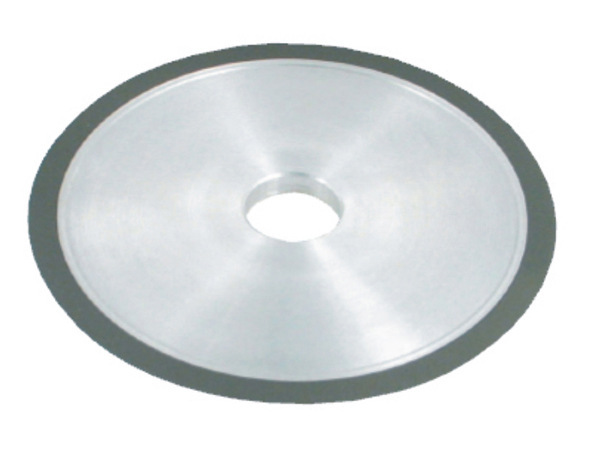
Selecting the correct diamond bond type for a specific application is a core decision that directly impacts tool performance, processing efficiency, and service life.
The bond type fundamentally determines a tool's adaptability under specific working conditions. When facing materials of varying hardness and abrasiveness, as well as the precision requirements of the final product, each bond type has its own ideal "arena." Choose correctly, and diamond particles are firmly embedded with stable protrusion, maximizing cutting or grinding capabilities. Choose incorrectly, and you often fall into the dilemma of rapid wear, frequent tool changes, and substandard surface quality, ultimately dragging down production efficiency and driving up total operating costs.
I. The Essence and Core Conflict of Bonds
The bond is the functional medium that fixes diamond or CBN abrasive grains to the tool matrix, typically composed of metal, resin, or ceramic powders. Its existence serves only one purpose: to release abrasive grains at a controllable rate, matching the customer's specific requirements for surface finish, cutting efficiency, or tool life.
However, a fundamental conflict exists in the bond's practical responsibilities: it must "hold onto" the abrasive grains while also "releasing them" at the appropriate time. Excessive holding force can prevent dulled abrasive grains from shedding in time, leading to tool glazing. Conversely, insufficient holding force causes grains to shed prematurely, wasting their effective cutting stroke. The correct bond grade essentially finds the precise balance between retention and release, ensuring every grain performs within its most effective cutting window.
II. What Determines Cutting Efficiency?
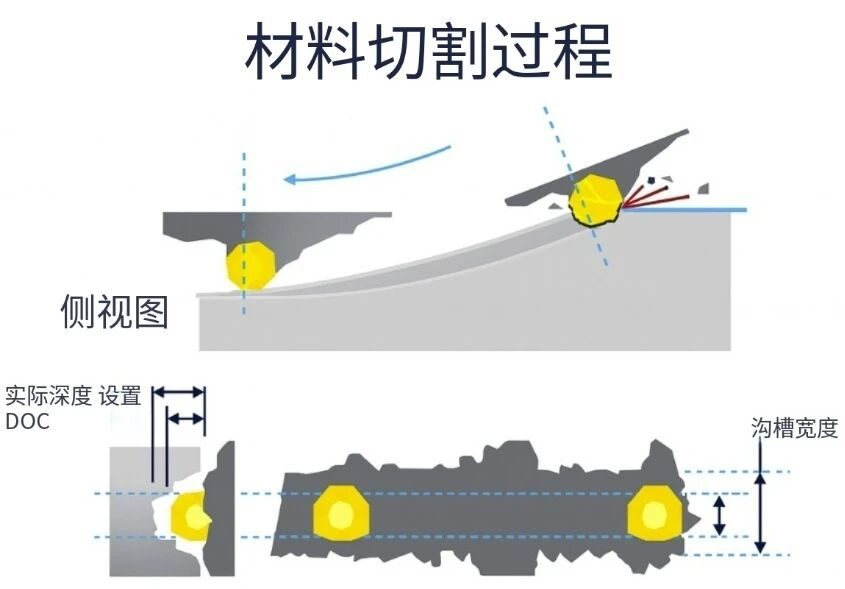
Abrasive cutting efficiency depends on two factors: depth of cut and retention strength.
Insufficient depth of cut: Abrasive grains cannot generate effective micro-fracturing. Material removal is dominated by friction, causing heat generation to skyrocket.
Excessive depth of cut: Abrasive grains experience impacts exceeding their strength limit, resulting in catastrophic fracture rather than normal wear.
The window between these two extremes is the effective zone where the bond must "cover" the abrasive grain to complete the cut. Bond hardness determines the width and position of this window.
(In practice, coatings or brazing methods are often used to enhance abrasive retention, decoupling the bond wear rate from the abrasive consumption rate for independent adjustment.)
III. The Three Jobs of a Bond
Abrasive Retention and Anti-Shedding
Fixes abrasive grains to the matrix through mechanical interlocking and chemical bonding forces. Retention force must cover the complete effective lifespan of the abrasive grain—shedding too early is wasteful, while shedding too late drags down efficiency.
Wear Matching and Layer-by-Layer Exposure
Once surface grains are dulled, the bond must wear down progressively at a rate matching abrasive consumption, allowing fresh grains from the underlying layer to intervene at the right time. This matching precision directly determines the smoothness of the tool's wear curve.
Stress Transmission and Structural Integrity
The bond is the final link in power transmission, efficiently delivering machine energy to the machining interface while withstanding high-speed rotation and impact loads without matrix cracking or delamination failure.
IV. Single-Layer vs. Multi-Layer: How Long Must the Tool Last?
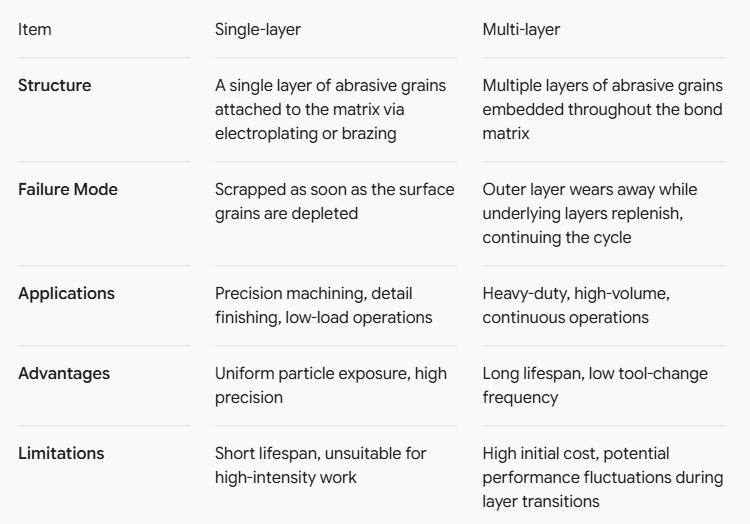
The precision advantage of single-layer tools stems from the consistency of particle exposure, whereas the long lifespan of multi-layer tools comes from the depth of the abrasive reserve. Both essentially represent an engineering trade-off between "precision priority" and "lifespan priority."
V. Before Selecting, Clarify These Key Factors
Workpiece Material
Hardness & Abrasiveness: High hardness and strong abrasiveness require tougher, more wear-resistant bonds (such as metal or high-grade bronze/ceramic bonds).
Thermal Sensitivity & Chemical Reactivity: Materials prone to burning or chemical reactions with specific bond materials require tailored formulations to prevent thermal damage or adhesion.
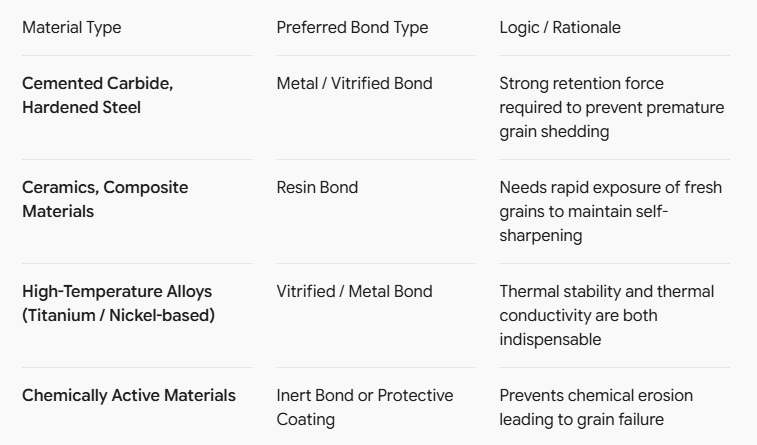
Machining Objectives
Surface Quality Priority: The wear characteristics of resin bonds allow them to continuously expose fresh grains, yielding a finer machined surface, especially suitable for precision parts sensitive to dimensional tolerances and surface integrity.
Material Removal Priority: The high wear resistance of metal bonds maintains aggressiveness in roughing and heavy-load conditions, reducing cycle times at the cost of relatively rougher surface quality.
Equipment Conditions
Spindle Power and Rigidity: High-power, high-rigidity equipment can utilize hard bonds to fully unleash the tool's cutting potential; lightweight equipment must use soft bonds to avoid cutting force overload causing tool failure.
Cutting Speed: High-speed conditions generate significant centrifugal force and heat accumulation, requiring thermally stable metal bonds with good thermal conductivity. Low-speed conditions offer a broader selection range, focusing more on surface quality or cost metrics.
The Economic Equation: Initial Price $\neq$ Total Cost
Multi-factor Evaluation: High-lifespan tools (metal/ceramic) have high initial costs, but lower cost-per-part and fewer downtime tool changes. Low-lifespan tools (resin) have low initial costs, but frequent replacements introduce hidden costs (downtime, setup, quality fluctuation) that must be factored in. Engineering decisions should use cost-per-part as the ultimate metric rather than unit tool price.
VI. What Happens When Bond Hardness Is Off?
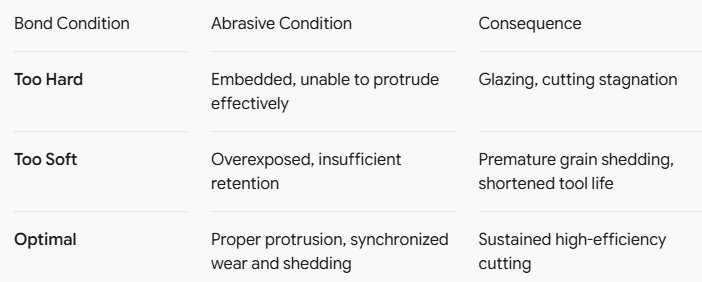
Ideal State: Abrasive protrusion height is consistent, and the bond wear rate synchronizes with the abrasive consumption rate. Grains participate in cutting at the optimal attack angle, maintaining self-sharpening until natural shedding at the end of life. Output characteristics: stable cutting speed, good surface quality, controllable edge chipping, low heat, and high consistency.
Hardness Too High: Abrasive grains cannot effectively protrude, friction dominates the cutting process, heat accumulates, the tool surface glazes, and cutting efficiency plummets. Frequent dressing is required to restore protrusion, consuming extra labor hours.
Hardness Too Low: Abrasive grains protrude too much but lack sufficient retention. Upon impact, entire grains shed prematurely rather than wearing down progressively, leaving dense pits visible on the matrix surface. The effective cutting stroke of individual grains is drastically shortened, causing tool life to drop off a cliff.
VII. Different Bonds for Different Jobs
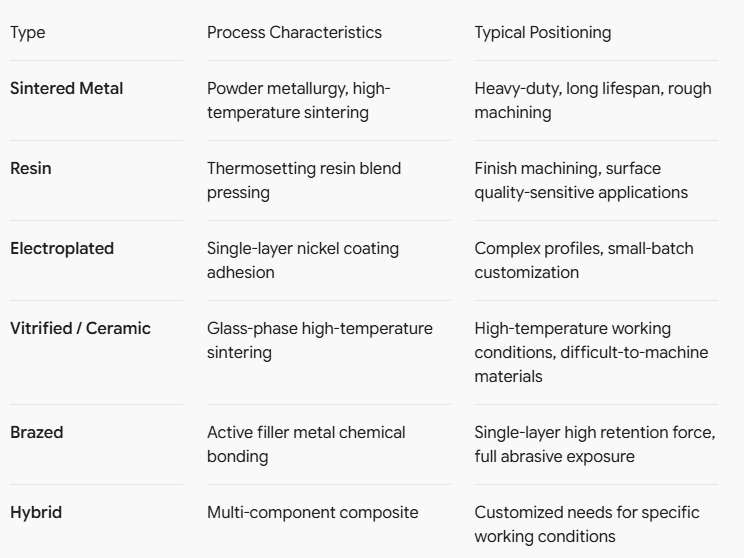
A frequently underestimated reality in selection is that tools with the exact same grit size and concentration can exhibit drastically different performance when switching bond types. For example, a 120-mesh resin bond can balance efficiency and finish in glass tube cutting, whereas a metal bond of the same grit size will produce unacceptable edge chipping. If a metal bond must be used, the grit size must be reduced to 600 mesh and the concentration increased—and even then, surface quality will still struggle to fully match the resin system.
This means bond selection is not a simple parameter table match, but a systematic trade-off based on material characteristics, equipment capabilities, machining targets, and cost constraints.
VIII. Selection: Ultimately Decided by Processing Cost
Define Machining Goals: Lifespan priority? Efficiency priority? Quality priority? The weighting of these three determines the initial direction for bond type screening.
Analyze Material Properties: Hardness, abrasiveness, thermal conductivity, chemical activity—each factor can overturn preliminary judgments.
Evaluate Equipment Boundaries: Available power, maximum RPM, cooling conditions—bond solutions exceeding equipment capabilities are unfeasible.
Calculate Total Life-Cycle Cost: Cost-per-part, not purchase unit price, is the only effective economic indicator.
Empirical Verification: Theoretical selection must be verified through actual machining, using data on cutting forces, temperature, and wear patterns to reverse-engineer and correct the approach.


